Loading...

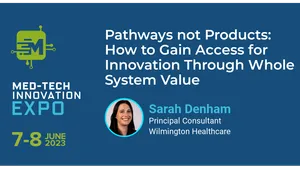
Principal Consultant
Wilmington Healthcare
Sarah is a Principal Consultant at Wilmington Healthcare. Having spent 14 years working in the pharmaceutical industry, she is highly experienced in helping companies to develop their strategic approach to working with the NHS and developing strategic partnerships within the integrated NHS landscape.
To successfully engage with the NHS in this way, pharma companies need a sound understanding of NHS policy and commissioning structures. Sarah not only assists companies in navigating the latest changes, she is also passionate about helping them to map the whole patient journey and define how a product fits into the new holistic integrated care pathways that are being implemented by the NHS.
Sarah’s experience of facilitating partnership working for pharma extends to helping companies to better engage with professional bodies, patient groups and academic institutions. She has also led cross functional teams in capitalising on opportunities arising from Government initiatives, such as the Accelerated Access Collaborative, and helped them to put their case to the Government on issues around specific medicines.
In addition, Sarah has specialist knowledge of cardiovascular disease (CVD), oncology, neurology and respiratory diseases. Most recently, she worked for a leading pharma company on national policy and partnership working for its CVD franchise.

Date

Trans-aortic valve implantation (TAVI) procedures for cardiac patients carried out in England still lag other comparable EU countries, with commissioners across the UK placing restrictions on the number of procedures.
From 2019 onwards, Wilmington Healthcare partnered with Edwards to provide a compelling case for change, in order for all severe symptomatic aortic stenosis (ssAS) patients to receive timely and equitable access to diagnosis and treatment across England.
What we did:
By mapping out a typical patient journey for AS through a similar process to NHS RightCare, we set out to show the difference between sub optimal care, delayed/missed opportunities for diagnosis and what this means in terms of deterioration of symptoms and ultimately the onset of heart failure; against an optimal pathway, showing what beneficial effect prompt detection, diagnosis and treatment can have on a patient, their family as well as the system costs.
This document provides a powerful case for change for commissioners to get under the skin of what is happening to individual patients.
We have then gone on to:
map out an end-to-end exemplar pathway, with a multi stakeholder expert group
explore improving community detection and onward referral into specialist care
implement the community detection pathway with two collaborative projects, working in two different locations
develop data to challenge ICSs on the scale of the problem of undetected/untreated AS patients.
Helping to increase capacity within Heart centres, by deep diving into their current patient pathway and looking at areas for improvement.
All this work has been done above brand but has enabled Edwards to provide compelling and persuasive evidence for the need to change. This is resulting in more patients being diagnosed in a timely manner and receiving life improving treatment with innovative technologies. We will discuss all this, how it was done and how it could be adapted for other medtech innovations.